Choosing between a salon appointment and a box of dye from the supermarket isn't really about which one is better. It's about what your hair needs right now, what you can spend, and how much upkeep you'll actually keep up with. Two people can walk away with the same shade and have completely different experiences — one with glossy, blended colour, the other with brassy ends and a patch at the crown. Here's the honest breakdown: cost, colour range, damage risk, and the maintenance nobody mentions at the till.
Cost: The Sum Looks Different After Two Months
A box kit costs a fraction of a salon appointment. That's true, and it matters if money is tight. But the box is only the start of the home maths. Long or thick hair often needs two boxes. Add colour-safe shampoo, a bond treatment or two if the ends go straw-like, and the towels you'll quietly sacrifice. If it goes wrong, a colour correction costs more than the appointment you were trying to avoid — sometimes considerably more, because correcting colour means undoing before rebuilding.
Where the salon money actually goes
You're paying for more than dye. A consultation where someone looks at your roots, your mid-lengths and the band of old colour you'd forgotten about. A formula mixed for your hair rather than for a shelf. A toner to knock out unwanted warmth. The application, the processing time, the wash, the blow-dry. And the judgement to say, "one shade lighter this time, then we'll go again in eight weeks."
Colour Range and Precision
Box dyes are made for the middle of the market. The shade on the front assumes a starting point you probably don't have, and the result depends on your natural depth, your porosity, and everything already on your hair. That photo is a modelling shot, not a guarantee.
In the chair, colour is mixed. Tone can be adjusted warmer, cooler, ashier or more golden. You can have fine foils, a root shadow, a gloss over the top. A colourist can also lift hair properly. If you want to go more than a shade or two lighter, want balayage, or want to move from dark dyed hair toward blonde, home kits aren't really in the conversation — they can't lift previously coloured hair reliably, and forcing it is how breakage happens.
Home kits come into their own when you're going darker, matching your natural depth, or refreshing an all-over colour. The closer you stay to your natural level, the more forgiving the result.
Damage Risk
Both routes use peroxide, and both can damage. The difference is control.
A box gives you one developer strength for everyone. Apply it root to tip and you're re-processing mid-lengths and ends that have already been coloured, often more than once. That's where overlap damage builds: dullness first, then split ends, then breakage. You also can't see the back of your head, and the timing is entirely on you.
A colourist assesses before mixing — elasticity, porosity, previous colour, how much lift the hair will tolerate in one sitting. Then they choose the developer, apply to the regrowth first, and bring colour through the ends at the end, or not at all. A good one will also tell you no, or tell you to come back in six weeks with a bond treatment in between.
One thing worth knowing: some henna-based and "natural" dyes contain metallic salts that can react badly with professional lighteners. Mention everything you've used, including whatever you bought online.
Grey Coverage and Regrowth
Grey is stubborn. It resists colour and needs proper coverage rather than a quick rinse, which is why permanent formulas do the heavy lifting and semi-permanents often disappoint. Regrowth shows up fast — around four weeks for many people, sooner if there's a high proportion of grey near the parting.
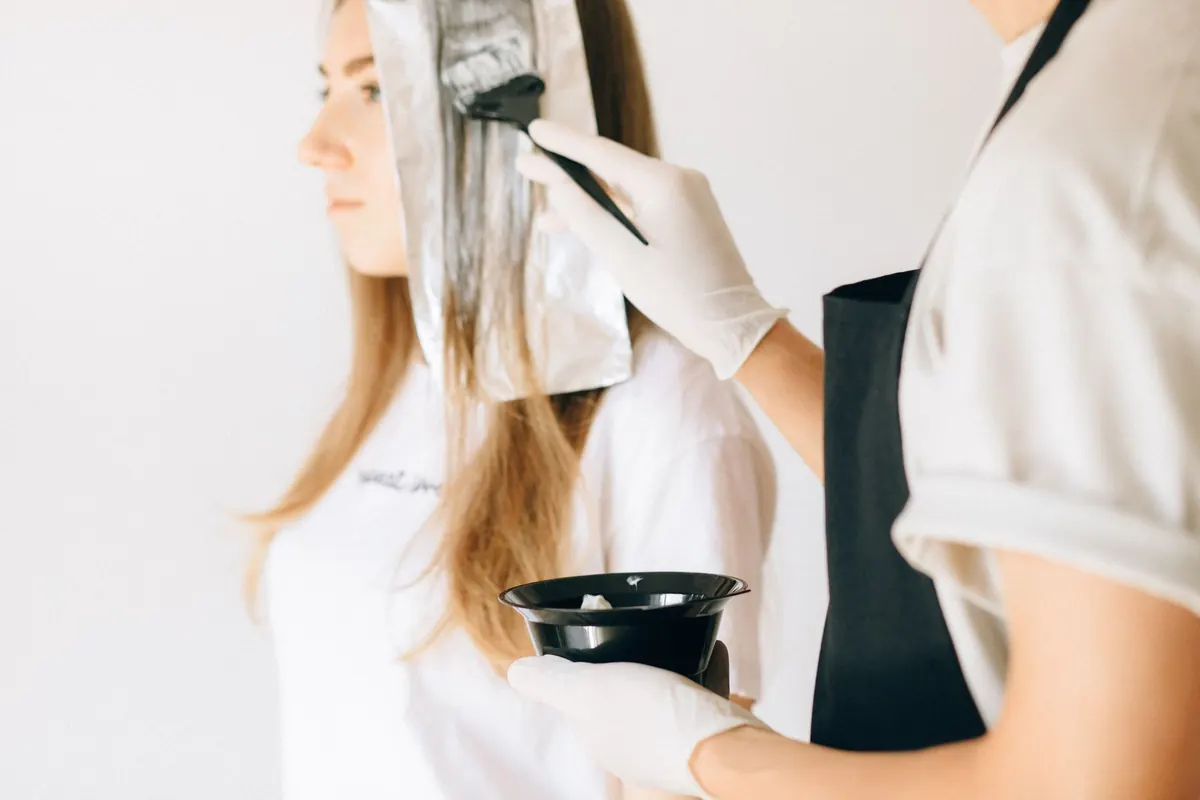
In the salon, regrowth can be tinted, glossed, or blended with a few foils so the line is softer and appointments stretch further apart. At home, a root touch-up with a tint brush and bowl beats pulling colour through the whole head again. Section into four, work in small partings, keep the product on the roots only, and use a barrier cream around the hairline.
A Quick Decision Guide
- Book the salon if you're going lighter, going blonde, making a big change, or fixing a home result that went wrong.
- Book the salon if grey is resistant, your hair is already fragile, or you want foils, balayage or a lived-in blend that grows out gracefully.
- Book the salon if you've used henna or a metallic-salt dye and want to lighten later.
- Use a home kit if you're refreshing an all-over shade at the same depth or darker.
- Use a home kit for root touch-ups between professional appointments.
- Use a home kit if budget is genuinely the deciding factor and you're confident with sectioning and timing.
Making Either Choice Work
Whichever way you go, a few habits protect your colour. Wait at least 48 hours before the first wash after colouring, use cooler water, choose a shampoo for coloured hair rather than a clarifying one, and always use heat protection. At home, keep a dedicated tint brush and bowl, wear gloves, and never leave colour on longer than the instructions allow in the hope of a stronger result. It doesn't work that way; it just costs you condition.
For roots, ask your colourist for the shade name and brand they use, or buy professional colour from a beauty supplier and mix it the same way. It keeps the tone consistent and buys you time between appointments.
And do the patch test. Every time you switch products, 48 hours before, on the inside of your elbow. It takes a minute. If you've had a reaction before, have a scalp condition, or you're pregnant or breastfeeding and unsure what's safe, speak to a pharmacist, GP or your colourist first. Skin and scalp reactions aren't something to push through.
Finally, if a home attempt has left you with orange ends, patchiness or a shade nowhere near what you wanted, book a consultation rather than reaching for another box. Two wrongs in one week is how hair ends up cut short.
Photo: Nataliya Vaitkevich / Pexels